Zinc
Trace mineral central to immune-positioned ranges, often paired with vitamin C.
- Type
- Mineral
- Measured in
- mg
At a glance
- Format suitability
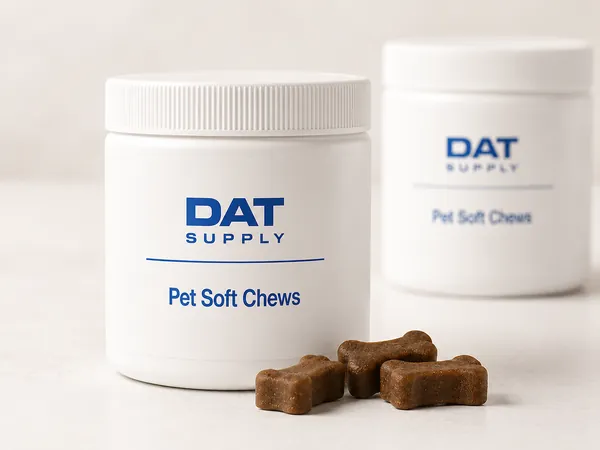
- Reviewed for powder sticks, oral strips, functional jellies and pet soft chews — confirmed per project.
Why brands use Zinc
Zinc is a mineral commonly considered for daily-wellness and sports ranges. On DAT Supply briefs it is most often considered for Immune gummies, Beauty stacks and Multivitamins — the exact positioning is set by the brand brief and reviewed against the target market’s claim rules. Editorially we frame it around Contributes to the normal function of the immune system (EU permitted claim) and Contributes to the maintenance of normal hair, skin and nails (EU permitted claim), using only EU 432/2012- or DSHEA-compatible wording for the final pack copy. Format-wise we have considered Zinc for powder stick, strip, jelly and pet soft chew; the per-format formulation notes below describe the live constraints (taste, payload, stability, packaging) we tune in the formulation pass. Sourcing form (extract ratio for botanicals, salt or chelate form for minerals, free-form vs ester for amino acids) is reviewed against the brief, with documentation matched to the target market’s import rules. Inclusion rate and claim wording are reviewed per project — we don’t publish off-the-shelf doses.
How we use Zinc in formulas
A public-safe formulation reference — how this active behaves in our formats, common pairings and handling notes. Final formulation, dose and on-pack copy are confirmed per project.
- Heat stable
- Limited — use coated forms
- Vegan supply
- Project-specific
EU-authorised health claims
EU-authorised wording for this ingredient is reviewed per project against Reg. 1924/2006 and the authorised list under Reg. 432/2012. No final claim wording is implied by this page.
Across the EU and UK markets Zinc is treated as a mineral nutrient: on-pack benefit wording must come from the EU 432/2012 register (UK retains the same wording post-Brexit), with the inclusion rate meeting the minimum thresholds tied to the chosen claim. For the US market, label copy follows DSHEA structure-function rules with the standard FDA disclosure. Mineral form (e.g. citrate vs oxide, glycinate vs sulphate) and the resulting elemental load are reviewed against the target claim — confirmed per project. The back-of-pack nutritional table is built against the market’s reference intake framework, and any country-level limits (France, Italy, Belgium for the EU; California Prop 65 for the US) are reviewed before launch.
Authorised at ≥15% NRV per daily serving. Claim wording must appear verbatim on consumer packaging. DAT reviews final pack copy per project against EU 1924/2006 and the authorised list under EU 432/2012.