Who it's for
Common California brand archetypes: ecommerce wellness, beauty and skin, sports nutrition. Active metros include Los Angeles, San Francisco, San Diego. Brand owners here evaluate powder stick as a launch format.
Configure, sample and produce your supplement range in one place.
California is a hub for ecommerce wellness, clean beauty, sports nutrition and high-volume DTC supplement operators across multiple metros. Single-serving powder sticks for powders, granulates and mix-in daily-routine products, packed in boxes of sticks.

Common California brand archetypes: ecommerce wellness, beauty and skin, sports nutrition. Active metros include Los Angeles, San Francisco, San Diego. Brand owners here evaluate powder stick as a launch format.
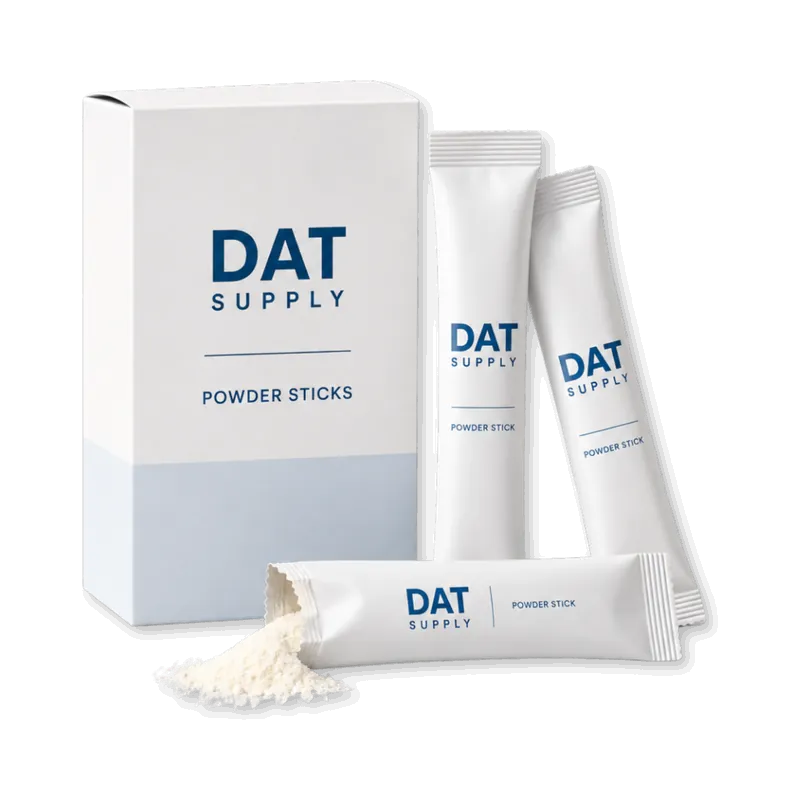
Single-serving powder sticks for powders, granulates and mix-in daily-routine products, packed in boxes of sticks.
Open a product below, order a sample, then place your order in your DAT Supply account — serving brands in California, including Los Angeles.
Powder stick · Beauty & Skin
Minimum order 3,000 boxes
Powder stick · Beauty & Skin
Minimum order 3,000 boxes
Powder stick · Beauty & Skin
Minimum order 3,000 boxes
Powder stick · Beauty & Skin
Minimum order 3,000 boxes
Powder stick · Daily Vitamins
Minimum order 3,000 boxes
From 3,000 boxes
Brand teams collaborate with DAT Supply remotely on formulation briefs, packaging artwork and production timelines. Standard production lead time is approximately 8 weeks after formula/specification, artwork and payment are approved. Shipping/transit is additional.
California has Sacramento as its capital and Los Angeles as its largest commercial city, serving a population of 39 million. Key cities include Los Angeles, San Francisco, San Diego, San Jose, Sacramento. The state's distinctive supplement footprint is anchored around the Carlsbad/San Diego wellness corridor, the LA beauty-and-wellness DTC cluster, and the Bay Area ingredient-forward founder scene. On the supplement industry signal: Largest US supplement market; Carlsbad/San Diego wellness cluster; LA/Long Beach is the #1 US container port; Prop 65 applies. California is the largest US supplement market by both retail dollars and DTC concentration. For brand owners briefing DAT Supply, California is treated as a US-market launch operating under federal DSHEA rules: the brand owner is the responsible label holder, the product is manufactured under 21 CFR Part 111 quality-managed manufacturing rules, and any state-specific labelling (the most common being California Prop 65) is reviewed at the artwork gate. Logistics typically run through the Port of Los Angeles / Long Beach (the #1 US container gateway by TEU), which DAT coordinates as part of a single project alongside manufacturing, documentation and ingredient sourcing. Where the brand owner has multi-state ambitions, neighbouring markets are listed in the internal links below for a single artwork project covering the wider region.
California carries the largest supplement market in the country, and that scale runs through three different clusters rather than one: the Carlsbad and San Diego wellness-brand corridor, the Los Angeles beauty-and-wellness DTC scene, and a Bay Area founder culture that reads an ingredient list before it reads a brand story. A sachet's single active, or short, clearly listed set of actives, suits that last audience especially well — the format puts the whole ingredient story on one small pouch face rather than a longer capsule label.
That same clarity carries into daily use: choosing a sachet means choosing a single measured dose to tear open and stir into water, a format decision that reads as deliberate rather than default in a market where a shopper has hundreds of competing labels to sort through.
Beauty is the most literal fit for the Los Angeles side of a California range: Collagen Beauty Premium Sachets and Hair, Skin & Nails Vegan Sachets both build from d-biotin and astaxanthin, giving a beauty-facing brand two label directions on the same two-ingredient base. Alongside them, several formulas state a single active plainly, which suits a Bay Area ingredient-forward buyer: Creatine Performance 3G Sachets and Creatine Plus 5G Sachets both name creatine monohydrate alone, and Digestive Fibre Pack Sachets names ginger root extract alone — each a one-line ingredient story rather than a longer list.
ACV Metabolic Daily Pack Sachets and the two spirulina-based greens blends, Greens & Superfruits Fibre Pack Sachets and its mushroom-added sibling, extend that same legible-ingredient logic into metabolic and greens positions, while Energy & Focus Nootropic Premium Sachets and its guaraná-based sibling give a Carlsbad-style wellness brand two live options to sample for a focus-and-cognition angle. None of these concepts exists only on paper — every formula named here is a current SKU in the lane.
A California sachet project usually moves faster when the label story is settled before sampling — one clear ingredient claim, or a short, deliberate stack.
California's DTC scene includes a Bay Area founder culture known for reading an ingredient list closely before a brand story. A sachet's short, clearly listed active set — one or two ingredients on many SKUs — suits that audience better than a longer capsule label would.
Creatine Performance 3G Sachets and Creatine Plus 5G Sachets both name creatine monohydrate alone, and Digestive Fibre Pack Sachets names ginger root extract alone. All three give a brand a one-line ingredient claim rather than a longer formulation story to explain on pack.
Collagen Beauty Premium Sachets and Hair, Skin & Nails Vegan Sachets both build from d-biotin and astaxanthin, giving a beauty brand two live formulas on the same ingredient base to sample against each other before choosing a label direction.
Flavour, colour and pouch-graphic choices sit inside Personalization on the existing formula. Any change to the active ingredients, dosage or the claims made on pack shifts a project into Formula Adaptation instead.
No — supplement labelling and claims for a California brand follow the same federal framework as every other state. Label claims and market compliance remain the brand owner's responsibility throughout, with no separate state approval process to plan a launch around.
Pick a product, choose your quantity and packaging, and see your price — serving brands in California.