Private Label Supplement Manufacturing for Kentucky Brands
Kentucky’s central location and the presence of UPS Worldport in Louisville make it a strategic hub for supplement distribution across the US. For brand owners evaluating a manufacturing partner, the state offers efficient access to national logistics networks. DAT coordinates remotely through DAT's project-managed production workflow, supporting Kentucky-based brands with supplement development and supply chain coordination.

The market at a glance
Kentucky has Frankfort as its capital and Louisville as its largest commercial city, serving a population of 5 million. Key cities include Louisville, Lexington, Bowling Green, Frankfort. The state's distinctive supplement footprint is anchored around the Louisville UPS Worldport DTC fulfilment corridor and the Lexington equine-and-bourbon CPG cluster. On the supplement industry signal: UPS Worldport (Louisville) is the largest automated air-package facility in the world. Louisville is a top-five US DTC fulfilment market thanks to UPS Worldport. For brand owners briefing DAT Supply, Kentucky is treated as a US-market launch operating under federal DSHEA rules: the brand owner is the responsible label holder, the product is manufactured under 21 CFR Part 111 quality-managed manufacturing rules, and any state-specific labelling (the most common being California Prop 65) is reviewed at the artwork gate. Logistics typically run through the Louisville UPS Worldport intermodal complex, which DAT coordinates as part of a single project alongside manufacturing, documentation and ingredient sourcing. Where the brand owner has multi-state ambitions, neighbouring markets are listed in the internal links below for a single artwork project covering the wider region.
What the category looks like here
UPS Worldport (Louisville) is the largest automated air-package facility in the world. Reading the Kentucky signal for a brand owner brief: the state's distinctive footprint is anchored around the Louisville UPS Worldport DTC fulfilment corridor and the Lexington equine-and-bourbon CPG cluster. Louisville is a top-five US DTC fulfilment market thanks to UPS Worldport. Federal DSHEA rules apply uniformly, so the regulatory backbone is identical to every US state; the differentiator is the cluster, the port access and the DTC channel concentration.
How this market is regulated
Dietary supplements are regulated federally in the United States as a category of food — the same national manufacturing and labelling rules apply in Kentucky as in every other state; there is no separate Kentucky supplement statute. Any claim on the pack must stay in the structure-function lane (describing an effect on the body, not treating or curing a disease) and carry the required federal disclaimer; advertising claims are reviewed separately for substantiation. The most common label rejections are: claims that cross into drug-claim territory, a missing disclaimer, daily-value figures that diverge from the federal reference values, and unsubstantiated weight-loss copy. Where the brand owner is preparing for a regulated retail channel (Whole Foods, Costco, Walmart, Target, Sprouts, Sam's Club), DAT supports the retailer-specific documentation pack — Certificate of Analysis, allergen statement, facility-registration confirmation and country-of-origin declarations — plus any voluntary certification (organic, non-GMO, vegan, kosher, halal, B Corp) the brand owner holds. DAT's artwork gate reviews every claim against this federal framework and against any state-level overlay that does apply — most commonly California's Proposition 65 warning where distribution reaches California — before the brand owner signs off. Every batch is lot-coded and traceable, and the brand owner remains the responsible label holder throughout.
Brands DAT typically works with in this market
- 01
DTC wellness brands — direct-to-consumer founders headquartered in the Louisville UPS Worldport DTC fulfilment corridor and the Lexington equine-and-bourbon CPG cluster, briefing Personalization SKUs that differentiate on active stack, format and packaging, with structure-function copy reviewed against the DSHEA disclaimer requirement.
- 02
Established multi-SKU ranges — mature brands with five-to-thirty SKUs running replenishment cycles on a white-label basis, requiring the standard documentation package and a batch-specific Certificate of Analysis where agreed for the project.
- 03
Retail private-label programmes — grocery, club and specialty retail private-label buyers requiring scale unit economics, retailer-specific documentation, and any state-specific overlay (most commonly California Prop 65 where distribution into California is in scope).
- 04
Specialty channel founders — fitness, beauty, sports nutrition, pet wellness and clinical-professional channel brands with channel-specific claim positioning; the working route is typically Personalization or custom, with stability data added to the documentation pack.
- 05
Multi-state expanding brands — brand owners using Kentucky as a base for a wider US footprint, re-using the artwork base across multiple states with state-specific overlays where required (Prop 65 for California; the New York Attorney General's botanical-authenticity standard for sensitive botanicals).
What sells in this market
The five demand categories most often briefed for Kentucky are: (i) sleep and stress — gummies, soft chews and oral strips lead, with structure-function claims ("supports restful sleep", "supports a healthy stress response") backed by the required DSHEA disclaimer; (ii) beauty and skin — gummies dominate, with structure-function copy around "supports healthy hair, skin and nails"; (iii) energy and focus — gummies and powder stick-packs cover the range; (iv) immune support — gummies and powders, with structure-function copy around "supports immune function"; and (v) kids and family multi-vitamin — gummies dominate, with allergen statements and FDA reference-value-based Supplement Facts panels. On format mix: gummies are the leading on-trend US format; soft chews are used for kids and family ranges; powders are used for sports nutrition stick-packs and tubs; oral strips are a fast-dissolve novel-delivery format. Format-specific notes for Kentucky: all formats require a Supplement Facts panel under 21 CFR §101.36 using FDA-published Reference Daily Intake values; allergens must be declared per the the destination market’s allergen labelling requirements; finished-product documentation reviewed per project scope covers identity, purity, strength, composition and contamination across every format. Retail channels driving these categories in Kentucky: independent natural-products retail, mass-market grocery and pharmacy chains, club channels (Costco / Sam's Club), specialty health-and-beauty retail, and a mature DTC ecosystem.
Getting product into the market
On logistics for Kentucky: goods are shipped to the Louisville UPS Worldport intermodal complex, cleared through US Customs under the brand owner's importer-of-record, and forwarded to the nominated US distribution centre by road or rail. DAT supplies the commercial invoice, packing list, ingredient declarations, FDA prior-notice filing and country-of-origin declarations needed for US Customs clearance. The brand owner names the importer-of-record (typically the brand owner's own US entity or a 3PL acting as agent). Working routes — DAT supports three for every market. White-label takes a reviewed concept from the public catalogue, adapts artwork to US Supplement Facts panel rules (21 CFR §101.36) and ships finished goods; this route is fastest to first-ship and is the typical starting point for a Kentucky launch. Personalization adjusts flavour, colour or an existing shape on the same formula while keeping the underlying formulation system stable; this route balances speed with brand-distinctive formulation. Custom development takes a brand-owner brief through bespoke formulation, packaging and stability work, with the quality-managed manufacturing documentation pack assembled from scratch. Documentation gates per project: brief review → spec confirmation → artwork review (the gate where structure-function copy, DSHEA disclaimer, Supplement Facts panel and any state-specific overlay such as California Prop 65 are locked) → batch-specific Certificate of Analysis after QC release under 21 CFR Part 111. Final timing for any of the three routes is confirmed during order setup before payment.
Frequently asked questions — Kentucky
Does DAT have a facility in Kentucky?
No. DAT Supply is your contracting supplier: it manages the product, production and documentation workflow and delivers finished goods to the brand owner's nominated Kentucky distribution centre.Which regulatory framework applies to supplements sold in Kentucky?
Dietary supplements are regulated at the federal level in the United States, so the requirements are the same in Kentucky as everywhere else — there is no separate Kentucky supplement statute. DAT reviews packaging and claims against the federal labelling, manufacturing and advertising-substantiation framework, and against any state-specific overlay that does apply (most commonly California's Proposition 65 warning), before the brand owner signs off.What does the DSHEA disclaimer require on a Kentucky-distributed pack?
Any structure-function claim must be accompanied by the FDA-prescribed disclaimer set out at 21 CFR §101.93(c). The disclaimer confirms the statement has not been evaluated by the FDA and clarifies that the product is not a drug. DAT's artwork gate confirms the disclaimer is present and legible whenever a structure-function claim is on the pack.How is the Supplement Facts panel built?
Per 21 CFR §101.36 with FDA-published Reference Daily Intake values for each declared nutrient. Allergen declaration follows the destination market’s labelling requirements. DAT supplies the panel as part of the artwork pack; the brand owner approves the final layout at the artwork gate.What about California Proposition 65 if I distribute into California from Kentucky?
California Prop 65 applies wherever the product is sold into California, regardless of the brand's home state. DAT reviews the formulation against the Prop 65 listed-chemical register at the brief gate and applies the required warning to the artwork where any listed chemical is present above the No Significant Risk Level.What documentation does DAT provide for a Kentucky launch?
Formulation specifications, raw-material certificates of analysis, finished-product documentation, the Supplement Facts panel, allergen declarations, and a batch-specific Certificate of Analysis where agreed for the project. The brand owner remains the responsible label holder under DSHEA.Which retail channels does DAT see for Kentucky?
Independent natural-products retail, mass-market grocery and pharmacy chains, club channels (Costco / Sam's Club), specialty health-and-beauty retail, and a mature DTC ecosystem. DAT supports retailer-specific documentation packs for the major regulated retailers (Whole Foods, Costco, Walmart, Target, Sprouts, Sam's Club) on request at the brief gate.How does DAT handle US Customs and import logistics for Kentucky?
Goods are shipped to the Louisville UPS Worldport intermodal complex, cleared through US Customs under the brand owner's named importer-of-record, and forwarded to the Kentucky distribution centre by road or rail. DAT supplies the commercial invoice, packing list, FDA prior-notice filing and country-of-origin declarations.How long does a Kentucky launch take from brief to first ship?
Final timeline is confirmed during order setup before payment. The timeline depends on the working route (white-label, Personalization or custom), the packaging format, the quality-managed manufacturing documentation pack assembly time and the production calendar at the time of order.Can DAT support a multi-state US launch starting from Kentucky?
Yes. The artwork base is re-used across states with state-specific overlays where required (most commonly the California Prop 65 warning where California is in scope). Neighbouring states for a single artwork project are listed in the internal links section below.
Continue exploring
- Related
Energy & focus gummies
Open page → - Related
Sleep & mood gummies
Open page → - Related
Kids Multivitamin Gummies
Open page → - Related
Energy Mushroom Gummies
Open page → - Related
Ashwagandha
Open page → - Related
Calcium
Open page → - Related
Manufacturing overview
Open page → - Related
All US manufacturing locations
Open page → - Related
Indiana manufacturing support
Open page → - Related
Private label gummies
Open page → - Related
Private label oral strips
Open page → - Related
Private label pet supplements
Open page →
DAT Supply works through five routes. Private Label is an existing DAT formula, unchanged, in its standard configuration options, from 1,000 units per SKU for gummies (PET bottle; doypack from 2,500). Personalization is the same formula with a supported flavour, colour or existing shape. Formula Adaptation adapts the ingredients, actives or dosage of an existing DAT formula; production is quoted once the formula is approved. A genuinely new formula, R&D or sourcing work is a Custom Project, and a format DAT Supply does not manufacture is declined.
All Kentucky projects follow a four-gate documentation model: brief review, spec confirmation, artwork review per the Kentucky framework, and batch release documentation. A Certificate of Analysis or independent lab testing is available on request. The brand owner remains responsible for the label under DSHEA. DAT supplies the technical dossier and regulatory documentation pack.
Reviewed formulas Kentucky brand owners can start from
A few representative products from the catalogue. You add your brand, and confirm artwork, claims and quantity as you build your product.
All formulas →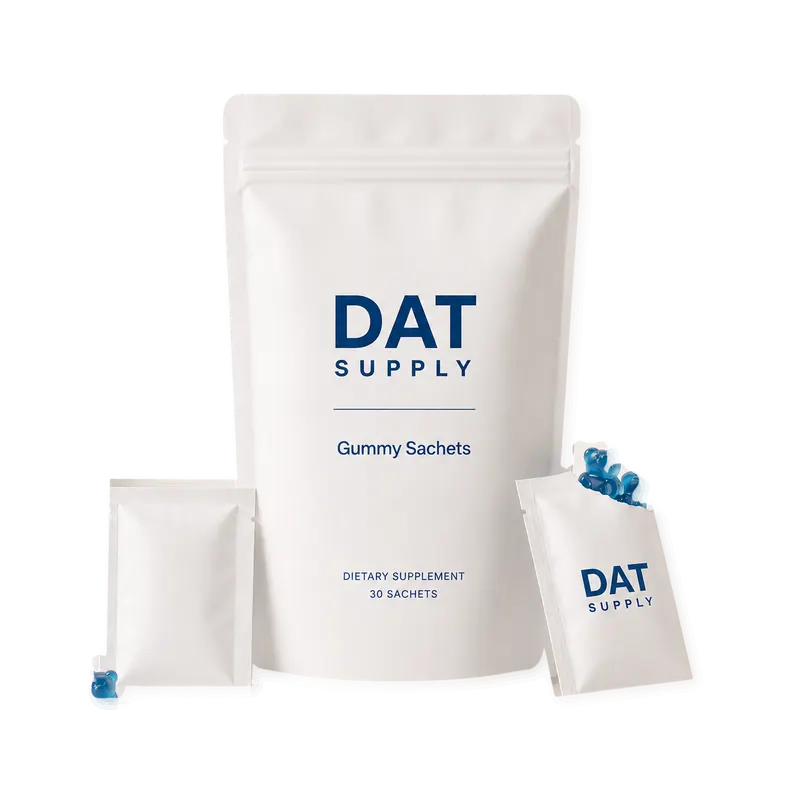
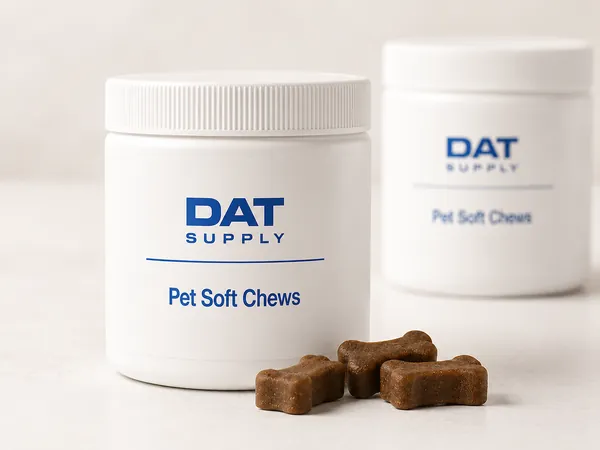
Pet soft chew · Pet Supplements
Dog Eye Vision Soft Chews
Minimum order 1,000 units

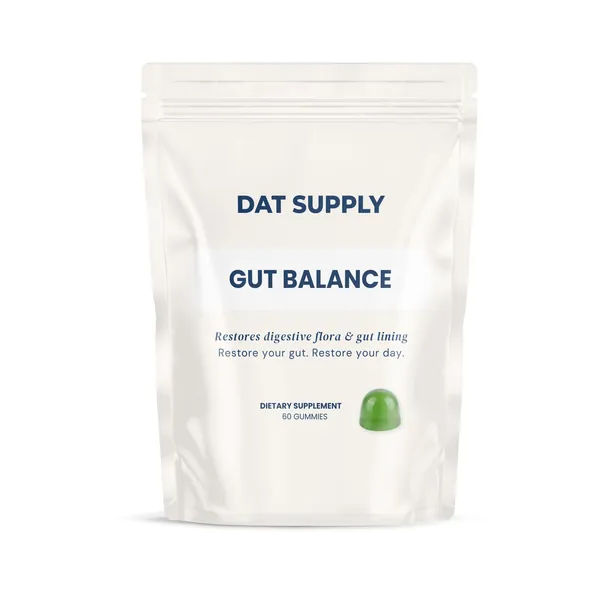

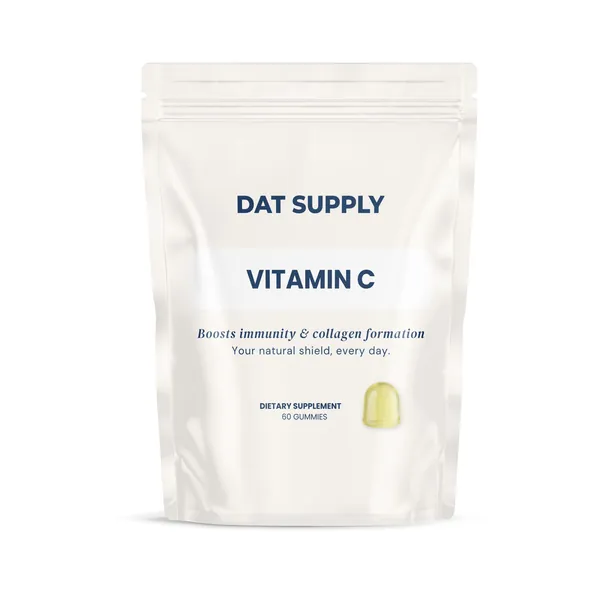
Gummies · Daily Vitamins
Vitamin C + Zinc Gummies
Minimum order 1,000 units
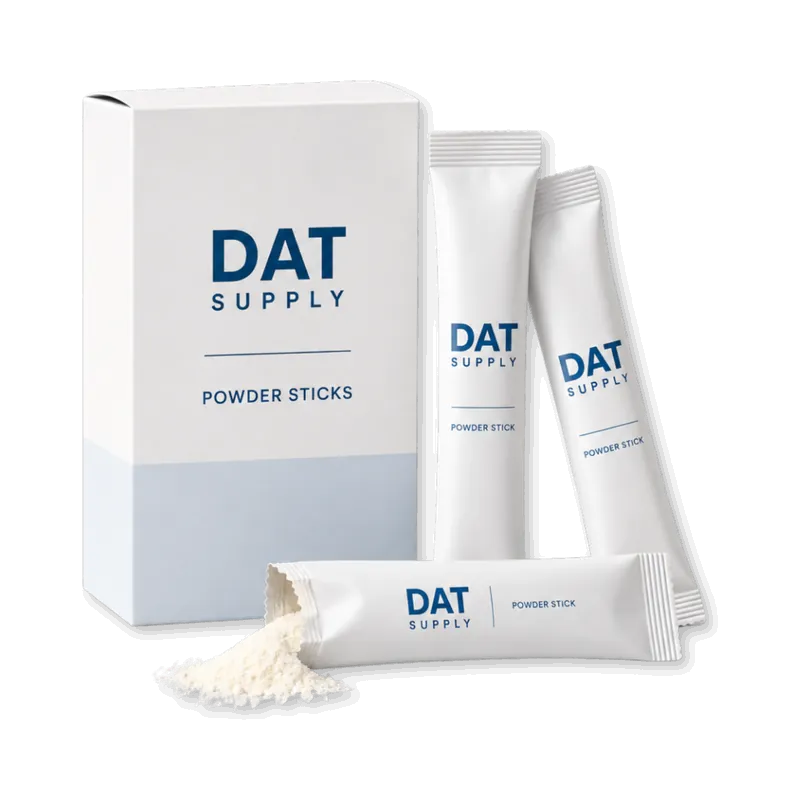
Locking a Kentucky sports-recovery specification before scaling
Sports and equine recovery positioning is specific to Kentucky's brand mix, and a recovery-focused audience tends to notice batch-to-batch variation more than a general-wellness buyer would. Locking the specification — active dose, format and flavour — at the sampling stage, then holding it fixed across reorders, matters more here than in categories where some drift is tolerated.
Two Kentucky channels, one production standard
Retail health adjacency and value ecommerce sit alongside the recovery angle in Kentucky's mix, and both can run from the same locked specification described above — the documentation and per-batch certificate of analysis apply the same way regardless of which channel the finished goods ship into.
Frequently asked questions — Kentucky brands
Why does specification consistency matter more for a Kentucky recovery SKU?
A sports- or equine-recovery audience tends to notice batch-to-batch variation, so locking active dose, format and flavour at sampling and holding that spec fixed across reorders matters more than in general-wellness categories.
Does channel (retail vs. Ecommerce) change the documentation for a Kentucky order?
No — staged documentation and the per-batch certificate of analysis apply the same way regardless of which channel the finished goods ship into.
Related pages for Kentucky brands
Continue exploring
Start a private label supplement project for your Kentucky brand
Pick a product, choose your quantity and packaging, and see your price — with documentation reviewed for Kentucky brand owners.