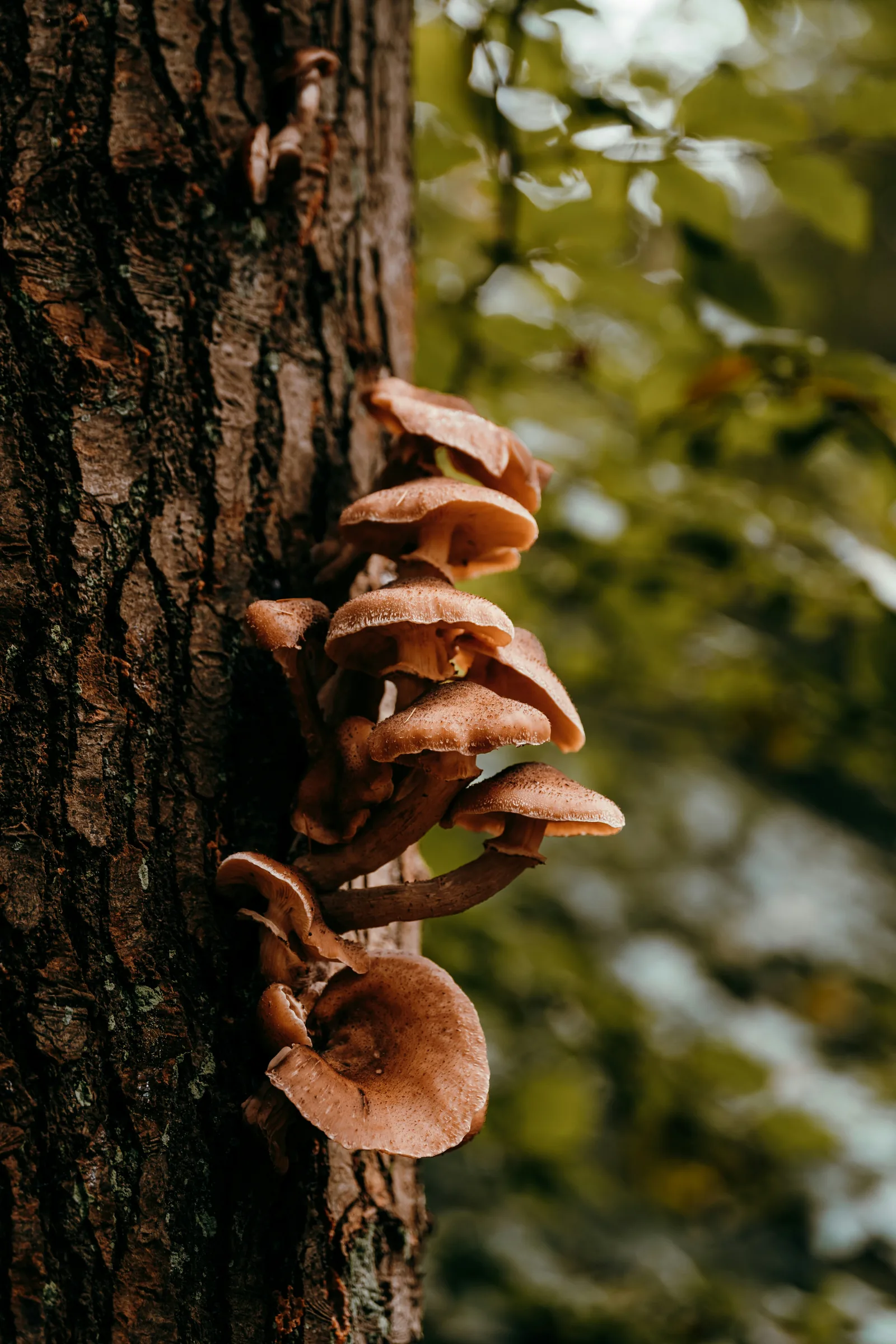
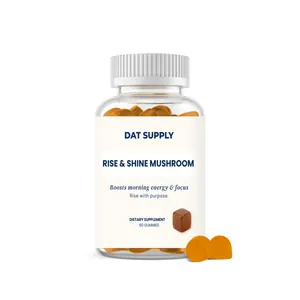
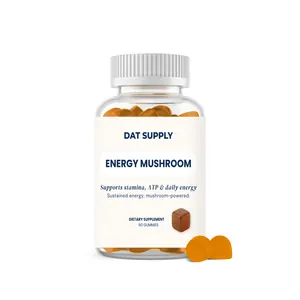
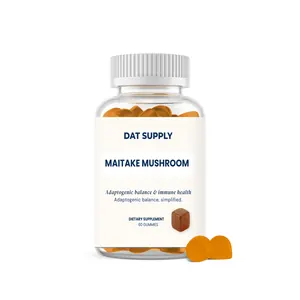
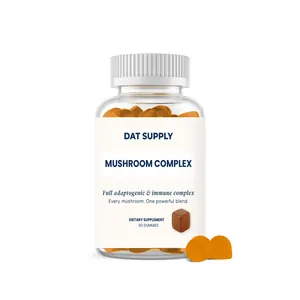
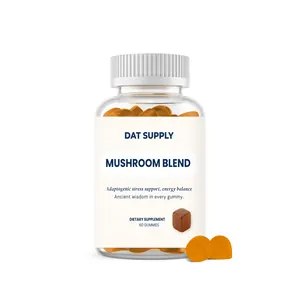
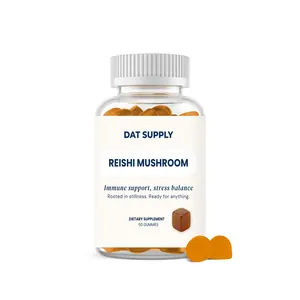
Configure, sample and produce your supplement range in one place.
At a glance
- Format suitability
- Reviewed for gummies — confirmed per project.
Why brands use it
Why brands use Maitake Extract
Maitake Extract is a botanical extract reviewed against the target market’s botanical rules, sitting in the botanicals family. On DAT Supply briefs the positioning is set by the brand brief and reviewed against the target market’s claim rules — we do not pre-position an active for any single benefit. Editorial framing uses only applicable claims framework- or DSHEA-compatible wording — we never promote unauthorised claims, even when the active has consumer-side momentum. Format-wise we have considered Maitake Extract for gummies; the per-format formulation notes below describe the live constraints (taste, payload, stability, packaging) we tune in the formulation pass. Sourcing form (extract ratio for botanicals, salt or chelate form for minerals, free-form vs ester for amino acids) is reviewed against the brief, with documentation matched to the target market’s import rules. Inclusion rate and claim wording are reviewed per project — we don’t publish off-the-shelf doses.
FormulationHow we use Maitake Extract in formulas
A public-safe formulation reference — how this active behaves in our
formats, common pairings and handling notes. Final formulation, dose and
on-pack copy are confirmed per project.
- Heat stable
- Limited — use coated forms
- Soluble in matrix
- Conditional
- Vegan supply
- Project-specific
Claim wordingUS structure-function statements
Structure-function wording for this ingredient is reviewed per project against DSHEA (21 USC §343(r)(6)). No final on-pack copy is implied by this page.
Botanical actives like Maitake Extract sit in a partially-harmonised EU claims position: most botanical health claims remain on hold (the "on-hold list"), and country-level rules (Italy, France, Spain, Belgium) layer on top with their own positive and negative lists for botanical use. Novel-food status is checked before any brief moves forward, alongside any traditional-use route where it applies. UK rules track EU wording post-Brexit but the GB market follows its own retained list. For the US market, structure-function wording under DSHEA applies, with the FDA disclosure on pack. Pack copy is rewritten per market and reviewed per project.
US structure-function statements Structure-function statements must appear with the FDA disclaimer in the same field of vision on the label. % Daily Value (DV) based on FDA 21 CFR 101.9.
These statements have not been evaluated by the Food and Drug Administration. This product is not intended to diagnose, treat, cure, or prevent any disease.
Serving
Typical serving and reference level
Where the serving level for Maitake Extract is set, and who sets it. The
figure that reaches your label is fixed against the specification for your
formula and your market — not read off this page.
- Measured in
- mg
Reference level Typical anchor: mg per serving — confirmed per project.
Maitake Extract is measured by weight (mg) per serving on DAT Supply briefs. The working anchor — the inclusion rate against which target-market claim wording is reviewed — is set during the formulation pass for each project rather than published as a fixed number on the public page. Final per-serving load depends on the chosen format (gummy payload window, capsule fill weight, softgel oil load, sachet or powder scoop size, oral-liquid bottle geometry) and the claim wording the brand needs to support against the target market. Sourcing form (extract ratio, standardised marker, micronised vs granular, salt or chelate form) is reviewed in the same pass. Country-level upper limits (France, Italy, Belgium for the EU; California Prop 65 for the US) are checked before any inclusion rate is finalised. Dose is confirmed per project — we don’t publish off-the-shelf dose tables for any active in the catalogue.
Research library
The evidence behind Maitake Extract
3 studies relevant to Maitake Extract, strongest
evidence first. Peer-reviewed sources and regulatory opinions. Citations only — DAT cites
the science, it does not endorse the publishers. Studies are on the ingredient, not on any
finished product.
Maitake ExtractPeer-reviewed studyStrong evidence
Beta-glucan from Grifola frondosa activates immune cells via dectin-1 and CR3 receptors
- Population
- In vitro (cell lines)
- Studied dose
- Not applicable
- Duration
- Not applicable
In vitro study demonstrating that maitake beta-glucan binds to dectin-1 and CR3 on macrophages and dendritic cells, leading to cytokine release.
Maitake ExtractPeer-reviewed studyModerate evidence
Maitake mushroom (Grifola frondosa) extract enhances immune function in healthy adults: a randomized, double-blind, placebo-controlled study
- Population
- Healthy adults (n=30)
- Studied dose
- 500 mg/day (standardized to D-fraction)
- Duration
- 4 weeks
Randomized trial in 30 healthy adults; maitake extract (D-fraction) 500 mg/day for 4 weeks increased NK cell activity and cytokine production.
Maitake ExtractPeer-reviewed study
Effect of maitake (Grifola frondosa) extract on glucose metabolism in type 2 diabetic patients: a pilot study
- Population
- Type 2 diabetic patients (n=12)
- Studied dose
- 1.5 g/day
- Duration
- 12 weeks
Pilot study in 12 type 2 diabetic patients; maitake extract (standardized) 1.5 g/day for 12 weeks improved insulin sensitivity and reduced HbA1c.
The formulas above sit in this private-label range:
Adjacent actives
Ingredients that sit alongside this one
Start Build a formula around Maitake Extract
Explore the private-label options that use Maitake Extract — review formula, format and packaging on each product before you commit.