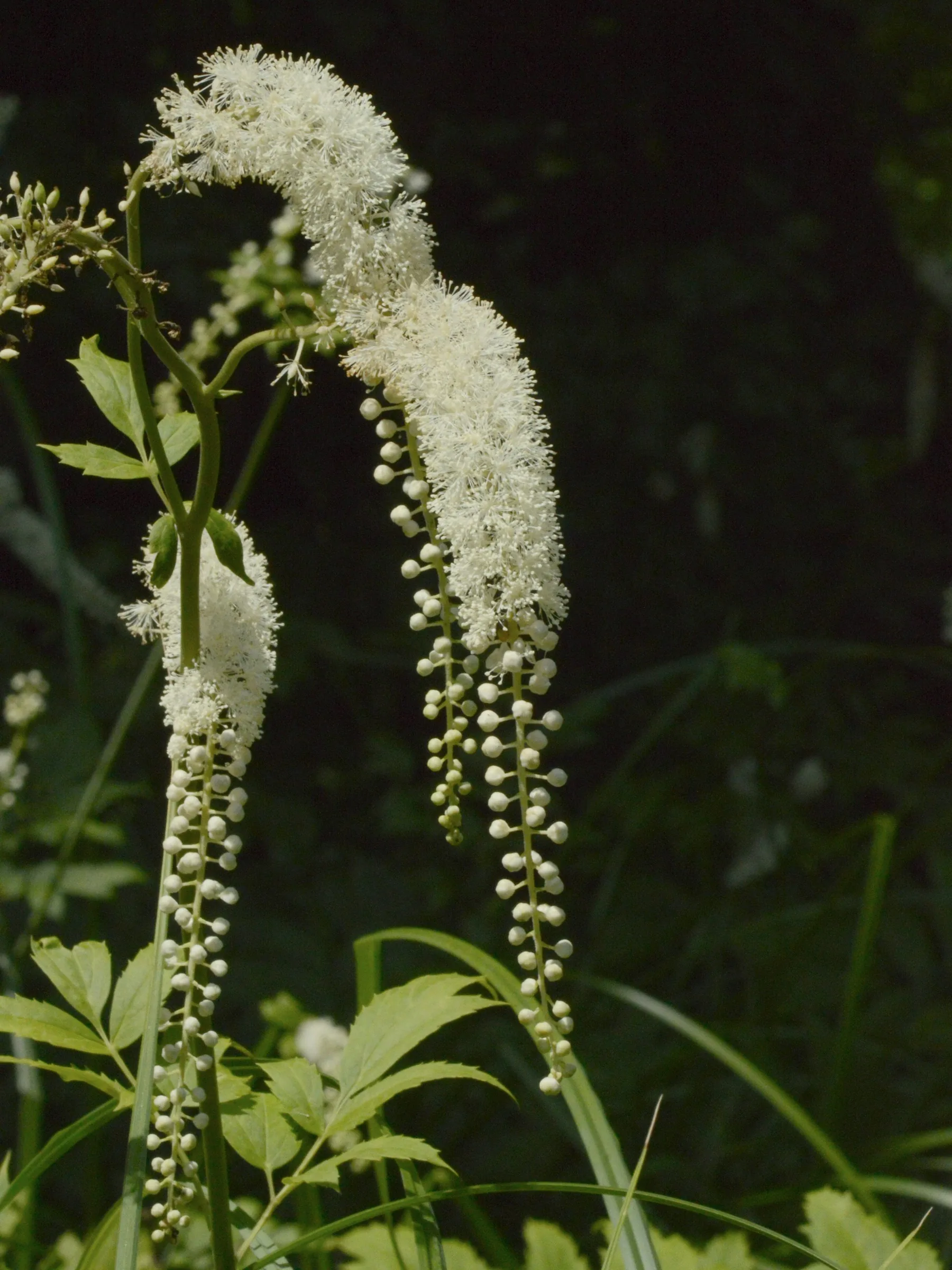
Black Cohosh
A 90-day oral toxicity study of a black cohosh extract in rats
- Studied dose
- up to 1000 mg/kg bw/day
No treatment-related adverse effects observed; NOAEL established at 1000 mg/kg bw/day.
Black Cohosh
Actaea racemosa (Black Cohosh) Monograph
- Studied dose
- not applicable
Provides specifications for identification, assay (triterpene glycosides), and limits for contaminants in black cohosh extracts.
Black Cohosh
Assessment of the hepatotoxicity of black cohosh (Actaea racemosa): a systematic review
- Studied dose
- varied
Rare cases of hepatotoxicity reported; causality not firmly established; potential for liver injury exists.
Black Cohosh
Bioavailability of black cohosh constituents: a review of pharmacokinetic studies
- Studied dose
- not applicable
Triterpene glycosides have low oral bioavailability due to poor aqueous solubility and first-pass metabolism. Formulation strategies such as solid dispersions or cyclodextrin complexation may enhance absorption.
Black Cohosh
Black Cohosh (Actaea racemosa) Monograph
- Studied dose
- not applicable
Defines identity, purity, and assay requirements for black cohosh root/rhizome extracts, including HPLC determination of triterpene glycosides as marker compounds.
Black Cohosh
Black cohosh (Cimicifuga racemosa) for menopausal symptoms: a randomized, double-blind, placebo-controlled trial
- Studied dose
- 40 mg/day of extract
No significant difference from placebo in reducing menopausal symptoms, but some secondary outcomes improved.
Black Cohosh
Black cohosh for menopausal symptoms: a Cochrane systematic review
- Studied dose
- varied (20-160 mg/day extract)
Insufficient evidence to support efficacy for menopausal symptoms; some trials show benefit, others not.
Black Cohosh
Black cohosh for menopausal symptoms: a randomized, double-blind, placebo-controlled trial with a herbal preparation
- Studied dose
- 40 mg/day of extract
No significant difference from placebo in reducing hot flashes, but some improvement in mood and sleep.
Black Cohosh
Black cohosh for menopausal symptoms: a randomized, double-blind, placebo-controlled trial with a standardized extract
- Studied dose
- 40 mg/day of extract
Significant reduction in hot flash frequency and severity compared to placebo.
Black Cohosh
Black cohosh for menopausal symptoms: a systematic review and meta-analysis of randomized controlled trials
- Studied dose
- 20-160 mg/day of extract (equivalent to 40-320 mg of herbal drug)
Significant reduction in menopausal symptoms (e.g., Kupperman Index) compared to placebo, but heterogeneity and risk of bias noted.
Black Cohosh
Black cohosh: a review of its safety and efficacy in the treatment of menopausal symptoms
- Studied dose
- varied
Generally well-tolerated; rare adverse events include gastrointestinal upset and rash; hepatotoxicity rare.
Black Cohosh
Development and Validation of an HPLC Method for Determination of Triterpene Glycosides in Black Cohosh Extracts
- Studied dose
- not applicable
Validated HPLC method for quantification of triterpene glycosides (actein, cimicifugoside) as markers for standardization.
Black Cohosh
Effect of black cohosh on menopausal symptoms and quality of life: a randomized, double-blind, placebo-controlled study
- Studied dose
- 40 mg/day of extract
Improvement in menopausal symptoms and quality of life compared to placebo, but not all endpoints significant.
Black Cohosh
Effect of gummy matrix on the stability of botanical extracts: a case study with black cohosh
- Studied dose
- not applicable
Incorporation into a gelatin-based gummy matrix resulted in a 15% loss of triterpene glycosides after 3 months at 25°C/60% RH, likely due to interaction with sugars and pH. Pectin-based matrices showed better stability.
Black Cohosh
Effect of sweeteners on the stability of black cohosh extract in gummy candies
- Studied dose
- not applicable
The presence of reducing sugars (e.g., glucose syrup) led to Maillard reaction products that accelerated degradation of triterpene glycosides. Using non-reducing sweeteners like isomalt improved stability.
Black Cohosh
Efficacy and safety of black cohosh (Actaea racemosa) in the treatment of vasomotor symptoms in postmenopausal women: a randomized, double-blind, placebo-controlled trial
- Studied dose
- 40 mg/day of extract
Significant improvement in vasomotor symptoms (hot flashes) compared to placebo, with good tolerability.
Black Cohosh
EFSA Scientific Opinion on the substantiation of health claims related to black cohosh (Actaea racemosa) and maintenance of joints, bone, and women's health
- Studied dose
- not specified
EFSA concluded that a cause and effect relationship could not be established for the claimed effects; no health claims were authorized.
Black Cohosh
EMA Community Herbal Monograph on Cimicifuga racemosa (L.) Nutt., rhizoma
- Studied dose
- 40-200 mg daily (corresponding to 4-12 mg triterpene glycosides)
Established use for relief of menopausal complaints; classified as a traditional herbal medicinal product with well-established use.
Black Cohosh
European Pharmacopoeia Monograph on Cimicifuga racemosa root
- Studied dose
- not applicable
Provides quality specifications for the raw material and extract; not a safety assessment.
Black Cohosh
FDA Poisonous Plant Database - Black Cohosh
- Studied dose
- not applicable
Listed as a plant with potential toxicity; no specific regulatory action.
Black Cohosh
Formulation challenges for botanical extracts in confectionery delivery systems
- Studied dose
- not applicable
Highlights the need for encapsulation or complexation to protect sensitive phytochemicals from heat, pH, and interaction with sugars. For black cohosh, using a standardised extract with a protective coating may improve stability in gummies.
Black Cohosh
Guidance on Botanical Drug Products
- Studied dose
- not applicable
Outlines quality control and standardization expectations for botanical extracts, including marker compound assays.
Black Cohosh
Guidance on Botanical Quality
- Studied dose
- not applicable
Provides recommendations for quality control of botanical ingredients, including identity, purity, and assay.
Black Cohosh
Guideline on Quality of Herbal Medicinal Products/Traditional Herbal Medicinal Products
- Studied dose
- not applicable
Sets requirements for quality, including standardization and assay of herbal extracts.
Black Cohosh
Health Canada Natural Health Products Ingredient Database - Black Cohosh
- Studied dose
- up to 80 mg daily of extract (standardised to 2-8% triterpene glycosides)
Licensed as a natural health product for relief of menopausal symptoms; requires caution label for liver.
Black Cohosh
Impact of pH on the stability of black cohosh extract in aqueous solutions
- Studied dose
- not applicable
Triterpene glycosides were most stable at pH 4-6, with increased degradation at pH <3 and >8. Gummy formulations with acidic pH (e.g., citric acid) may reduce stability.
Black Cohosh
Long-term use of black cohosh and risk of breast cancer: a prospective cohort study
- Studied dose
- not specified
No increased risk of breast cancer with long-term use, but limited data.
Black Cohosh
Stability of black cohosh extract in a model gummy formulation over 12 months
- Studied dose
- not applicable
In a pectin-based gummy, triterpene glycosides retained >90% of initial content after 12 months at 25°C/60% RH. However, in a gelatin-based gummy, retention was only 70%.
Black Cohosh
Stability of triterpene glycosides in black cohosh extracts under various storage conditions
- Studied dose
- not applicable
Triterpene glycosides showed degradation when exposed to high humidity and elevated temperatures, with significant loss after 6 months at 40°C/75% RH. Recommended storage in airtight containers at controlled room temperature.
Black Cohosh
Thermal degradation of cimicifugoside in black cohosh extract during processing
- Studied dose
- not applicable
Cimicifugoside showed significant degradation at temperatures above 60°C, with a 30% loss after 30 minutes at 80°C. This suggests that gummy manufacturing processes involving high heat may reduce marker content.
Black Cohosh
Typical Commercial Specification for Black Cohosh Extract
- Studied dose
- not applicable
Typical specification: standardised to 2.5% triterpene glycosides (as actein) by HPLC; loss on drying ≤5%; heavy metals within limits.