Private-label supplement manufacturing across the formats brand owners actually launch.
One manufacturing network, three working routes, four documentation gates — applied across gummies, soft chews, oral strips, capsules, softgels and adjacent formats. The brand owner remains the food business operator on pack.
- Formats supported
- 12
- Working routes
- 3
- Documentation gates
- 4
- Target markets
- EU · UK · US
reviewed format capabilities live.
white-label · semi-custom · custom.
brief · spec · artwork · release.
reviewed per market framework.
One platform, taken seriously across formats. Depth of formulation, packaging and documentation review — not a marketplace of vendors.
DAT manufactures private-label nutraceuticals through a project-managed production workflow. Format is chosen against the brand brief — not the other way around.
Multi-format manufacturing, reviewed end to end
Each format runs through the same four-gate model — brief, spec, artwork, release — so documentation, packaging and positioning stay aligned across the range.
-
Gummies
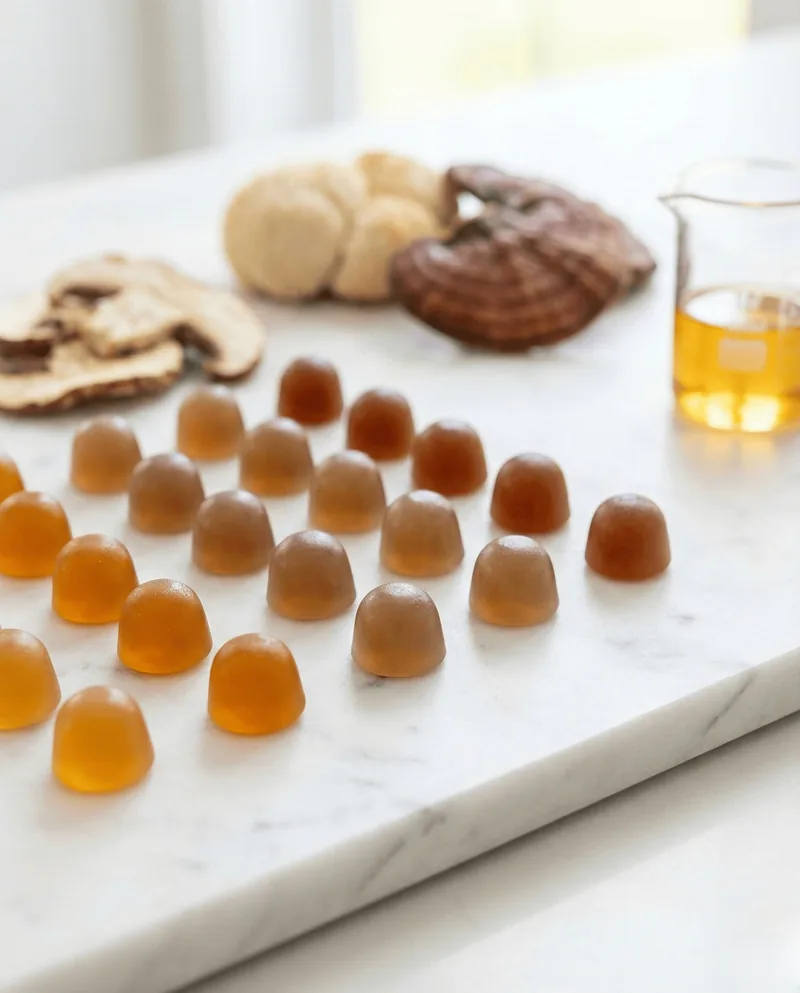
Pectin-based supplement gummies — the mature DAT Supply format. Used across daily wellness, beauty, sleep and kids ranges.
-
Filled gummies
Gummies with a liquid or paste-filled centre. Advanced sub-format; reviewed per project against the brief.
-
Soft chews
Soft, paste-based chewable supplement format. Distinct from gummies — its own matrix, base and process.
-
Capsules
Hard or vegetarian capsule format. Reviewed per project; documentation route follows the standard project gates.
-
Softgels
Softgel format for oil-soluble actives. Reviewed per project; sub-supplier capability confirmed during the brief.
-
Tablets
Compressed tablet format. Reviewed per project; finish (uncoated, film-coated, chewable) confirmed during the brief.
-
Powders
Loose powder or scoopable supplement format. Format confirmed per project — jar, doypack, sachet or tub.
-
Liquid drops
Dropper-bottle supplement format for oil-soluble or precise-dose actives.
-
Shot vials
Single-serving liquid shot vial format. Reviewed per project against retail and logistics constraints.
-
Oral strips
Fast-dissolving oral strip format. Reviewed per project; payload range confirmed during the brief.
-
Functional jellies
Pouchable functional jelly format for daily-routine and on-the-go supplement concepts.
-
Functional snacks
Snack-style functional formats. Concept review during the brief — DAT confirms feasibility before quoting.
-
Pet supplements
Soft chews and adjacent formats for dog and cat wellness ranges, reviewed per species claim framework.
Pick the route that matches the brief.
Every project moves through one of three routes. Final routing is confirmed inside the portal — the route shapes the documentation set and the timeline.
Reviewed concept, brand artwork.
Pick a reviewed concept from the catalogue and adapt brand artwork. The fastest path from brief to launch — packaging, claims and documentation are reviewed against the target market.
- Best for
- First SKU · short timelines
- Lead time
- Confirmed in the quote
Adjusted within an existing matrix.
Adjust dose, flavour or active stack within an existing matrix. Differentiate the SKU without a full custom-development cycle. Documentation route follows the same project gates.
- Best for
- Differentiated SKU · existing brand
- Lead time
- Confirmed in the quote
Bespoke formulation and dieline.
Fully bespoke formulation, custom flavour profile and packaging dieline. The right route for category-defining launches with longer planning windows and committed quantities.
- Best for
- Category-defining launch · committed quantities
- Lead time
- Confirmed in the quote
Brief to released batch
Each step is reviewed before the next gate opens — across every format.
- 01
Brief review
Target market, format, quantity, claims direction.
- 02
Route
White-label, semi-custom or custom — confirmed against the brief.
- 03
Spec lock
Per-SKU specification + allergen statement drafted, then locked.
- 04
Artwork
Dieline + on-pack copy reviewed against the target-market framework.
- 05
Production & QC
In-process control plan agreed; production runs through the controlled manufacturing workflow.
- 06
Batch release
Batch-release documents are issued after production and QC release.
Project gates, not promises
DAT releases documentation as the project moves through each gate. Batch-release documents are issued after production and QC release.
- 01StageBrief reviewReviewed
Target market, format, quantity, claims direction
WhenProject entry
ReceivesFeasibility view + working route confirmation
- 02StageFormula & spec confirmationReviewed
Formulation route, allergen statement, per-SKU specification
WhenAfter brief sign-off
ReceivesSpecification draft + spec-locked formula
- 03StageArtwork & label reviewReviewed
Dieline, on-pack copy, claim wording per market framework
WhenIn parallel with spec lock
ReceivesReviewed artwork against the target-market framework
- 04StageProduction & QCReviewed
In-process control plan, stability and QC release rules
WhenOnce spec & artwork are signed off
ReceivesProduction run + in-process control records
- 05StageBatch-specific documentsReviewed
Per-batch QC, traceability, release-for-shipment
WhenAfter production & QC release
ReceivesBatch-specific Certificate of Analysis + traceability
- 06StageRepeat order supportReviewed
Forecast review, raw-material lead times, improvement notes
WhenPer repeat order
ReceivesRefreshed documentation per project stage
Documentation availability depends on product, market and project stage. The brand owner remains the food business operator and is responsible for final filings in each target market.
What DAT needs before reviewing manufacturing
The inputs below shape the route, the format, the documentation set and the project timeline.
- 01 Target market
Primary distribution market and any secondary markets — drives label, claims and notification scope.
- 02 Quantity
Indicative MOQ tier and forecast for the launch window. Used to confirm route and packaging.
- 03 Formula direction
Positioning, active ingredients in scope and any non-starters. Custom development is reviewed against the brief.
- 04 Packaging format
PET bottle, doypack or sachet — pack format influences the production route and documentation set.
- 05 Timeline
Target launch window. Production calendar and raw-material lead times are confirmed in the quote.
- 06 Claims & label requirements
Any approved claim wording, regulatory framework, or label requirement you already need to honour.
Practical guides for your project
DAT manages the project end to end
DAT manages supplement launches from formula selection through production, documentation review and batch release. Project-specific documentation and facility details are handled inside the project workflow where required — released to the brand owner per project stage, not as a public list.
- Controlled manufacturing route, confirmed per project
- Project-stage documentation; batch-specific QC release
- Target-market review for claims, labelling and notifications
Start a manufacturing project
Send your project brief — DAT will review and route it to the right working track. Final routing is confirmed inside the portal once the brief has been reviewed.